Seach my blog

Showing posts with label physiotherapist. Show all posts

Saturday, 12 September 2015

Rosehip Syrup

Thank you to everyone who attended my herb walk this morning.

Below, as requested, for those of you who don't have access to my Facebook page, is the recipe I use to make rosehip syrup.

Rosehip Syrup
Rosehips (the fruit of the wild rose, Rosa spp) are rich in many vitamins and minerals. Indeed, as fruit became scarce during the war years, rosehips were collected as a vital addition to the diet, having more vitamin C than oranges! Rosehip syrup was given to mothers for their children, and a Ministry of Food leaflet encouraged people to make their own syrup from the hedgerows.


Below is a traditional recipe for a rosehip syrup. Although heating the hips leads to some loss of vitamin C, this method serves the purpose of prolonging storage.


• Add 500g chopped rosehips to 1.5 litres water.
• Boil for 20 min's.
• Strain through double layer of muslin.
• Discard pulp, return the fluid to the pan.
• Simmer until volume reduced by half (approx will do!).
• Measure volume and add half as much sugar (eg. 500ml, add 250g sugar).
• Warm gently until sugar dissolved (stirring), then boil for 5 min's.
• Pour whilst warm into sterilised, warmed, glass bottles.
• Label and store in a cool place. Refrigerate once opened.


NB. Collect rosehips from areas where they will not have been sprayed and away from roadsides.

Thursday, 28 May 2015

Free drop-in advice on health and herbal remedies

For anyone in Wiltshire:

Free drop-in advice on herbal remedies:

10am - 12 noon, Thursday 5th February, 2015, at Swindon Pulse Wholefoods (27 Curtis St). No booking required.

I’ll be there to offer free advice and guidance, and to give you the opportunity to ask any questions you may have regarding Herbal Medicine.

See www.lynblythe.com for more information on Herbal Medicine.


Sunday, 5 October 2014

Hawthorn, a herb for heart health

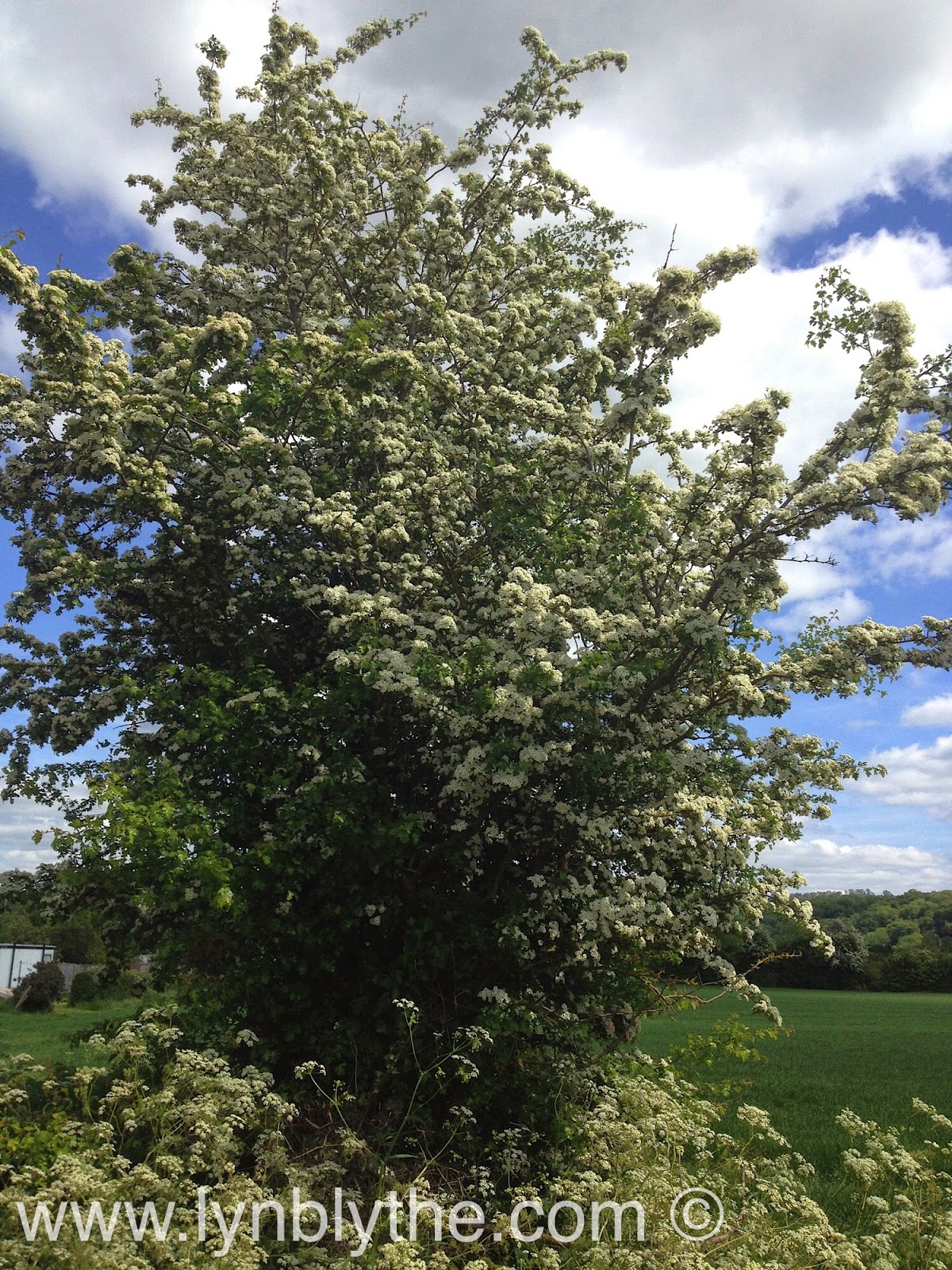
The value of hawthorn (Crataegus spp) to a herbalist cannot be overstated! Luckily, it is a frequent find in the UK hedgerows.

Hawthorn berries (Crataegus spp)


Hawthorn (Crataegus spp)


Flowering tops are picked in the Spring, and the ripe berries collected in the Autumn. These are used to make tinctures (medicines), or dried for teas (infusions) and capsules.

Whilst most herbs tend to have numerous widespread actions, hawthorn is almost exclusively a herb used for the heart and circulatory system by modern day herbalists, and hawthorn is regarded as one of the safest herbs in our dispensary.


The actions of hawthorn have been used to help people with conditions such as angina, mild to moderate heart failure, either high or low blood pressure (depending on which other herbs are combined with the hawthorn in the prescription), Raynaud's Syndrome, atherosclerosis, some menopausal symptoms, chilblains, varicose veins and many other cardiovascular complaints. The precise effect of a prescription will, of course, depend upon which other herbs the hawthorn is combined with. 

A vast array of studies support such clinical uses of hawthorn. For example, the European Journal of Heart Failure reported Crataegus to be beneficial in treatment of heart disease due to induction of cAMP-independent positive inotropy, peripheral and coronary vasodilation, protection against arrhythmias, having antioxidant properties and anti-inflammatory effects (see below for more).   

Although a gentle herb, anyone with an existing health condition, or currently taking medication, should seek advice before using any herbs.


Hawthorn and lime blossom tea

Editorial (2008). Towards a systematic approach in the assessment of efficacy of an herbal preparation: Hawthorn (Crataegus spp.). European Journal of Heart Failure 10: 1153-1157

Krzeminshi, T., Chatterjee, S.S. (1993). Ischaemia and early reperfusion induced arrhythmias: beneficial effects of an extract of Crataegus oxyacantha. L Pharm Pharmacol Lett 3: 45-48


Friday, 25 April 2014

Free Advice on Safely Tailoring Herbal Remedies to Your Individual Needs (proceeds to MS)

For anyone in Wiltshire:

FREE PAMPER DAY AT THE SWINDON THERAPY CENTRE FOR MS on Friday 2nd May (10am-2pm)
All proceeds to the MS therapy centre (a registered charity).

I will be offering FREE HEALTH CHATS and ADVICE ON TAILORING HERBAL REMEDIES to your individual health needs.

Swindon Therapy Centre for MS                      

Bradbury House,
Westmead Drive,
Swindon.
SN5 7ER.

See www.lynblythe.com for information on Herbal Medicine, and for a map and directions to the Swindon Therapy Centre for MS, or email lyn@lynblythe.com.


Other free therapies available include physiotherapy, massage, yoga, Nordic walking, Bowen Technique, reflexology, reiki, beauty treatments, Cyclossage massage bed.

Thursday, 30 May 2013

Free Health Chats

For anyone in Wiltshire:

I will be offering free health chats and advice at Swindon Pulse Wholefoods (27 Curtis St) on Thursday 6th June, 2013. No booking required - just drop in between 10am - 12 noon (see also www.lynblythe.com)

Thursday, 13 September 2012

Cold and 'flu' season approaches

So, as we leave the Summer behind, and head towards the cold and 'flu' season, what can we do to help prevent respiratory infections?

Elderberries (Sambucus nigra)

There is mounting evidence to support herbalists' use of elderberries to fight colds, 'flu' and other respiratory ills.

http://www.ncbi.nlm.nih.gov/pubmed/21352539

The berries are rich in Vitamin C and anthocyanins, reported to be significantly antioxidant and antiviral.


Elderberry syrups are a popular traditional cold remedy:

  • Remove elderberries from their stalks by pushing them off with a fork.
  • Weigh the ripe berries, then simmer them in half their volume of water for about 20 minutes.
  • Strain through muslin or a jelly-bag.
  • Cool, then squeeze out the juice.
  • Measure the juice and add half the weight of sugar.
  • Simmer for another 20 minutes, then pour into warmed sterilized jars or bottles.

The syrup can be taken either 1 tsp every couple of hours during a cold, maybe mixed with other tinctures or remedies, or boiled water added to make a drink to help fend off a cold.


Elderberry Syrup


Onion syrup

This sounds like an acquired taste, but is surprisingly palatable, made very quickly and uses ingredients found readily to hand.


Onion syrup


At the first sign of a cold coming on:

  • Chop an onion.
  • Layer (alternating) the onion pieces with honey (or sugar) in a jar.
  • Finish the layering with honey (or sugar) on the top.
  • Place the jar in the 'fridge.
  • Within hours the honey (or sugar) will have drawn fluid out of the onion.
  • Take a teaspoon of the fluid (ie. syrup) every couple of hours.


A chopped up garlic clove can be added in with the onion - if you don't mind repelling friends and visitors as well as your cold!


Thursday, 6 September 2012

More About Herbal Medicine


Herbal medicine is made from plants (for example, Echinacea and St. John’s Wort), and has been used for thousands of years. Medical Herbalists are trained to combine the benefits of this traditional use with information emerging from modern scientific research.
Medical Herbalists see people with most conditions treated by GPs
These conditions range from short-term or mild problems, to more long-term and complex.

Examples include:

• Heart and circulation problems– high blood pressure, high cholesterol, varicose veins, angina, poor memory
• Respiratory problems – asthma, hayfever, sinusitis, ear infections, bronchitis, coughs, colds
• Digestion problems – IBS, colitis, ulcers, constipation, reflux, bloating, food intolerance
• Nervous system problems – poor sleep, headaches, anxiety, depression, stress, multiple sclerosis, Parkinson’s disease
• Women’s health – PMS, period pains, cystitis, infertility, endometriosis, PCOS, menopausal symptoms, fibroids, irregular periods
• Men’s health – prostate problems, infertility
• Musculoskeletal problems – arthritis, gout
• Skin problems – eczema, psoriasis, acne
• Immune system problems –fatigue, allergies


Why use herbs

A benefit of herbs is that they are generally well-tolerated and safe, with a gentle action, yet can be amazingly effective.

Research is increasingly uncovering the way herbs achieve their effects.

The herbalist aims to identify and address the cause of symptoms, rather than suppress them, as symptoms are warning signs to indicate a health problem.

A prescription of herbs is tailored to each individual, so two people with the same condition are unlikely to be given the same combination of herbs. Often there are many herbs which may address the problem. The herbalist is trained to select the most appropriate for each individual, and to combine this with other herbs to support the effect.

The herbalist is often able to select herbs in a way which allows several health issues to be addressed at the same time.

Herbs are often easily accessible –including many of the “weeds” just outside your own home!

About Lyn

I am a member of the National Institute of Medical Herbalists (NIMH) and the College of Practitioners of Phytotherapy (CPP)

I have over 30 years experience of working in healthcare with patients, both in the NHS and in the private sector, spanning most areas of health and illness.

I regularly attend professional lectures, workshops and seminars to continue to build on my skills, and to keep up to date with research.

I have a First Class BSc (Hons) degree in Herbal Medicine. I was awarded the Arthur Barker prize for best Final Clinical Examination. I am a member of the National Institute of Medical Herbalists (NIMH).

I also have a First Class BSc (Hons) degree in Physiotherapy. I practise as a physiotherapist, am a member of the Chartered Society of Physiotherapists (CSP) and I am registered with the Health Professions Council (HPC).

I have a BSc (Hons) degree in Physiology with Biochemistry.

About Herbal Medicine

Medical Herbalists use plant medicines to address a wide range of illnesses, including long-term complaints. These herbal medicines can be used safely in all age groups, and are often used alongside medication from the GP.

There are times when orthodox medications or surgery are essential. However, at other times, there is often another way. By careful consideration of the cause of symptoms and illness, it is frequently possible to improve health. The use of herbs, many of which have been part of our diet for generations, offers a well-tolerated and safe alternative or addition to more modern treatment strategies.